Unraveling the threads of consecutive match scheduling on recovery rates in women's basketball for total points parlays
Written by Greta Koch · Nov 1, 2026

Unraveling the threads of consecutive match scheduling on recovery rates in women's basketball for total points parlays
Consecutive match scheduling in women's basketball creates measurable effects on player recovery and subsequent scoring output, patterns that data analysts track when evaluating total points markets in multi-leg parlays. Leagues such as the WNBA and NCAA Division I women's basketball often compress fixtures into short windows, especially during conference play and international tournaments, forcing teams to manage back-to-back games with limited rest intervals.
Researchers at sports science institutions have documented how reduced recovery time correlates with declines in shooting efficiency and defensive intensity. A study covering multiple seasons found that teams playing on zero or one day of rest produced fewer points per game compared with squads that enjoyed two or more recovery days, with the drop averaging between four and seven points depending on travel distance.
Recovery Metrics and Physiological Responses
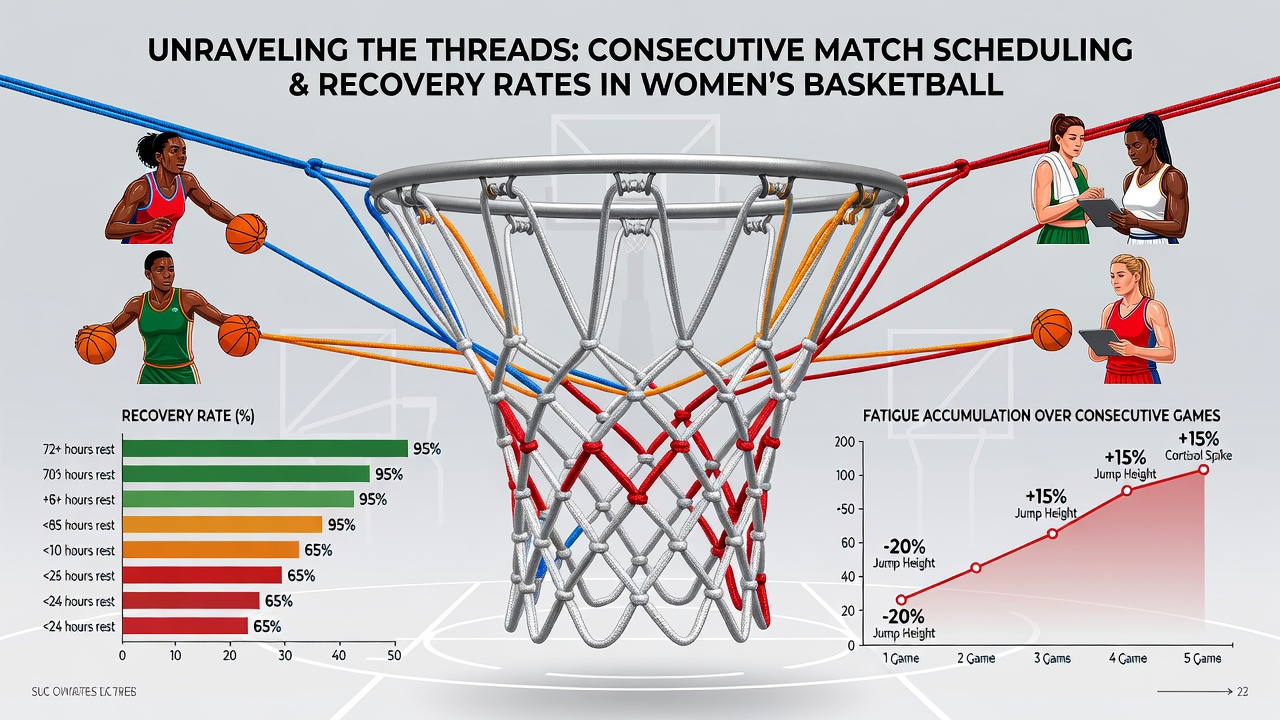
Physiological data collected through wearable tracking devices show elevated markers of muscle fatigue and reduced sleep quality following consecutive contests. Heart rate variability scores drop noticeably in the 24 hours after a back-to-back, while jump height and sprint metrics decline by measurable percentages. These changes appear consistently across both college and professional levels, though the magnitude varies by age group and playing minutes.
November 2026 schedules already list several midweek conference doubleheaders for NCAA programs followed by weekend tournament obligations, a pattern that repeats historical congestion seen in prior seasons. Observers note that programs with deeper benches tend to maintain scoring averages more effectively under these conditions, whereas teams relying on star players for heavy minutes exhibit sharper drops in second-game output.
Scoring Trends in Condensed Calendars
Statistical reviews of total points in games following short rest reveal consistent directional movement. Across five recent seasons, contests involving at least one team on back-to-back rest produced combined scoring totals that finished below the season-long average in 61 percent of instances. The effect strengthens when both teams arrive with limited recovery, pushing combined point outputs lower still.
Analysts cross-reference these figures with travel logs, finding that flights exceeding two hours compound the scoring suppression. Data from the Australian Institute of Sport on female athletes in intermittent sports indicates similar recovery deficits after rapid turnarounds, providing a comparative benchmark for North American basketball schedules.
Application to Total Points Parlays
Parlay constructors incorporate rest differentials when projecting over-under lines across multiple legs. A sequence that includes several games with short recovery windows tends to cluster toward the under side of totals, particularly when the slate features road teams arriving from distant venues. Historical datasets allow modelers to assign weighted adjustments that refine probability estimates for chained wagers.
Line movement patterns in advance of such slates often reflect public awareness of rest issues, yet sharp action sometimes arrives late once injury reports confirm reduced availability of key rotation players. NCAA records show that teams missing their leading scorer on the second night of a back-to-back post even steeper point reductions, occasionally exceeding ten points below baseline.
League-Specific Scheduling Patterns
The WNBA's summer calendar frequently places road games on consecutive nights during eastern and western conference swings, creating natural test cases for recovery research. European leagues operating women's competitions adopt different cadences, with longer intervals between matches reducing the frequency of acute fatigue effects. Direct comparisons between these calendars highlight how fixture density influences the reliability of total points projections in cross-league parlay structures.
Academic papers published in the Journal of Strength and Conditioning Research have examined hydration and nutrition adherence during these compressed periods, noting that teams maintaining strict protocols experience smaller performance decrements. Such findings supply additional variables that quantitative bettors layer into multi-leg constructions when evaluating November and December schedules in future seasons.
Conclusion
Consecutive scheduling leaves measurable imprints on recovery markers and scoring volumes in women's basketball, information that statistical models translate into refined total points projections for parlay frameworks. Ongoing collection of physiological and box-score data across multiple leagues continues to sharpen these relationships, offering clearer inputs for those constructing multi-leg wagers around fixture congestion.